
TMJ (Jaw) Release
a body led approach to jaw tension, clenching, headaches and facial tightness

Gentle, targeted support for jaw tension, headaches, and nervous system stress.
Temporomandibular Joint Dysfunction (TMJD) occurs when the two joints connecting your jaw are not moving smoothly or are out of alignment. This can contribute to a wide range of symptoms, including headaches or migraines, jaw clicking or popping, teeth grinding, neck and shoulder tension, muscle spasms, restricted jaw movement, and, in some cases, jaw locking.
At AB Massage in Belfast, Christchurch, TMJ Jaw Release Massage offers focused, compassionate care in a private, nurturing space where your body can feel safe enough to soften and release.
Many clients experience:
A sense of ease through the jaw, face, neck, and shoulders
Reduced frequency or intensity of headaches
More comfortable jaw movement and less clenching
Feeling calmer and more settled after sessions
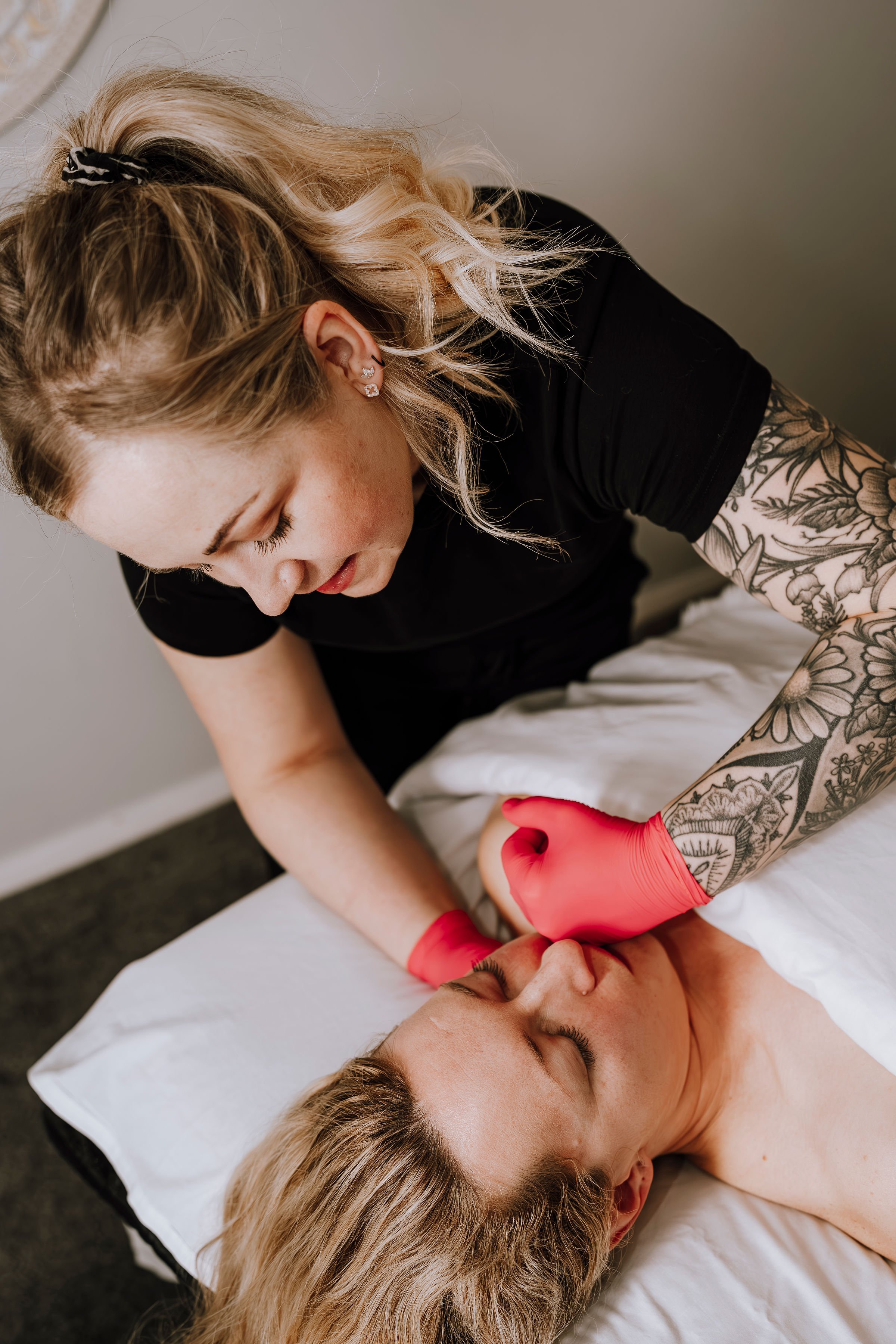
A whole-body approach to jaw tension
This treatment is not just a jaw massage. The jaw is deeply connected to the rest of the body, particularly the hips, spine, neck, and nervous system - so we treat it that way.
Sessions usually begin by working through the hips to support balance and mobility, before moving into the back, shoulders, neck, and front of the neck. From there, we work gently through the head, face, and jaw muscles.
When appropriate and with your full consent, this may include intraoral work (inside the mouth) to access deeper jaw tension that cannot be reached externally. Everything is explained beforehand, and your comfort always comes first.
What to expect from your session
A calm, unrushed environment in a private Christchurch studio
Clear communication throughout the treatment
Pressure guided entirely by your comfort and sensitivity
A session tailored to how your body presents on the day
Every TMJ case is different. Your treatment will be shaped by what your body needs most, rather than following a fixed routine.
Treatment progression & results
For best results, a short series of sessions is often recommended - typically around three treatments, depending on the cause and severity of symptoms. With each session, we gradually increase focus around the jaw as your body allows, supporting deeper release without overwhelm.
Frequently Asked Questions
-
TMJ refers to the temporomandibular joints that connect your jaw to your skull. When these joints or surrounding muscles aren’t moving well, it can lead to jaw pain, headaches, neck and shoulder tension, or clicking and locking. Massage helps by gently releasing tension through the jaw and related areas of the body, supporting better movement, ease, and overall balance.
-
Intraoral (inside the mouth) work may be included if appropriate and with your full consent. Everything is explained beforehand, and external work and facial work can still be very effective if you prefer.
-
I usually recommend at least three sessions two or three weeks apart for the best results. TMJ work is gentle and builds gradually as your body allows. The first session is often an introduction for you and your nervous system, a chance for your body to feel the work and begin to settle. Deeper, more lasting changes often come with the second and third sessions, as your body feels safer to let go.
Everyone responds differently … Some people notice meaningful change within those three sessions, while others benefit from more regular care, such as a few sessions spread through the year. We’ll always work at your pace and adjust based on how your jaw and nervous system respond.